

STRATEGY
Strategy
Our strategy is to start with the low hanging fruit first. We get the wins on the board and then build momentum.
Secondly, the strategy, policy changes and economics MUST stand up to scrutiny.
We will need to be ready for opportunities when they present themselves. But the simplest place to start is Tasmania. We then tackle local government elections as they present themselves in other states.


Next Elections
Local Government NSW - 2028
Local Government VIC - 2028
Local Government TA - 2026
Local Government WA - 2027
Local Government QLD - 2028
Local Government SA - 2026
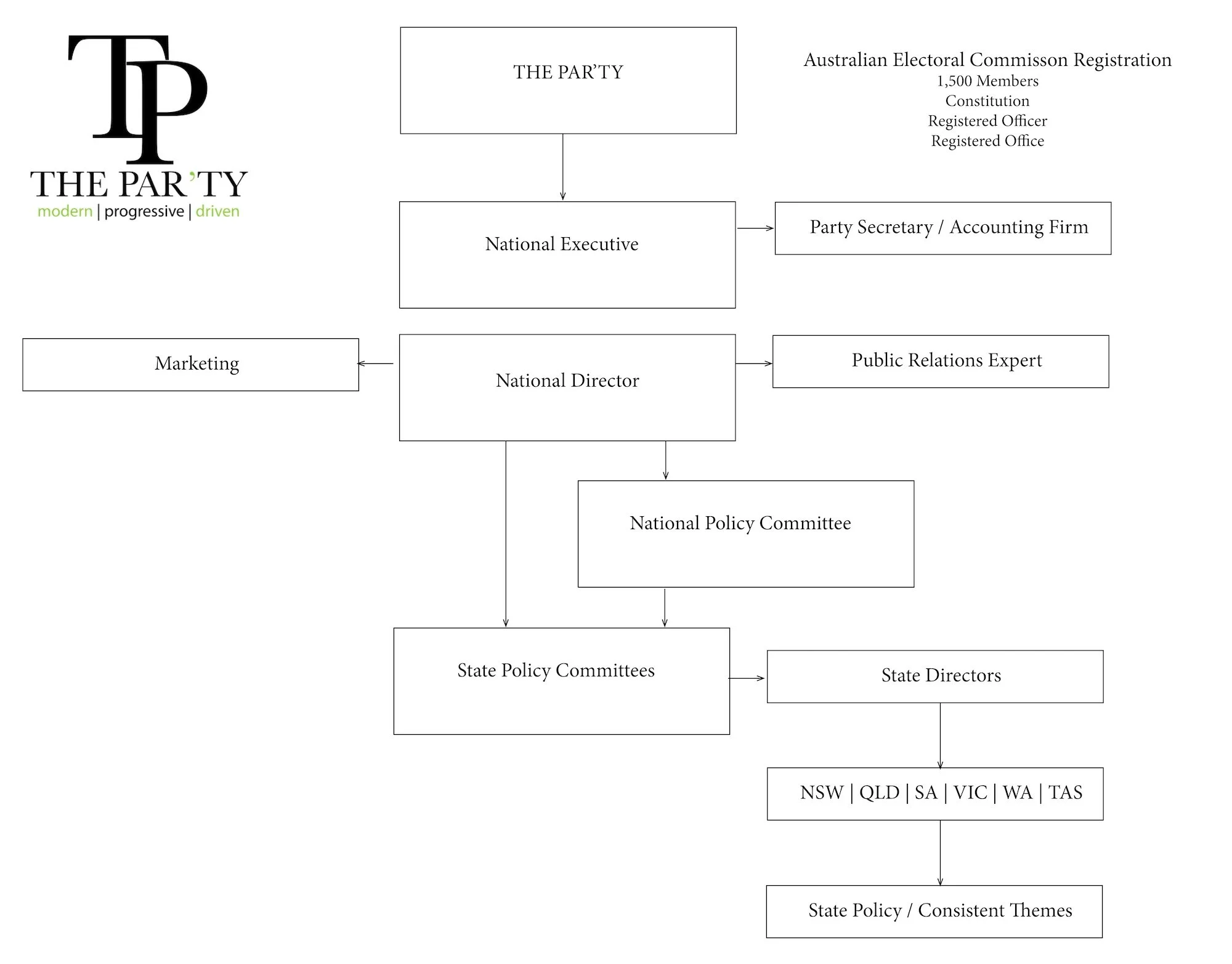
Organisational Strategy
Tasmanian Local Government
It’s extraordinary to think that Tasmania has 29 local governments and in-excess of 348 councillors). Add to this an Upper and Lower House of State Parliament.
Strategy
Run candidates in key local government areas.
Timing
The next round of local government elections will be held in October 2026.
Federal House of Representatives
Federally Tasmania has 5 federal members and 12 senators.
Strategy
I would not run federal candidates but rather focus on the Senate.
Timing
The next round of federal government elections will be held in 2028.
State Government NSW - 2027
Local Government QLD - 2028
Local Government TA - 2029
Local Government WA - 2029
Local Government VIC - 2026
Local Government SA - 2026


Tasmanian State Government - House of Assembly
Tasmania’s lower house with 35 members. 14 Liberal, 10 ALP, 5 Greens, 5 Independents, 1 Shooters, Fishers and Farmers.
Strategy
Run candidates in key local government areas.
Timing
Up to 4 year terms, next election 2029.
Tasmanian State Government - Legislative Council
Tasmania’s upper house with 15 members. 3 Liberal, 3 ALP, 1 Green, 8 independent.
Strategy
Dominated by independents so run candidates in key seats.
Timing
6 years. Periodic cycle electing 2 or 3 divisions each year.
How is policy designed, structured and implemented?
Policy is a science. We study it at school and in universities. It’s a complex stand-alone field that is often diluted by various actors who have influence, power or motive. We elect politicians in essence to be the ‘policy actors’. They guide, shape and design policy - rightly or wrongly - and move on to allow others to take their place. But they are the face of what we call the ‘policy cycle’.
Before you delve into the analysis, take some time to read our POLICY 101 page. We guarantee after you do, you will never view the political system and the word ‘POLICY’ the same again.